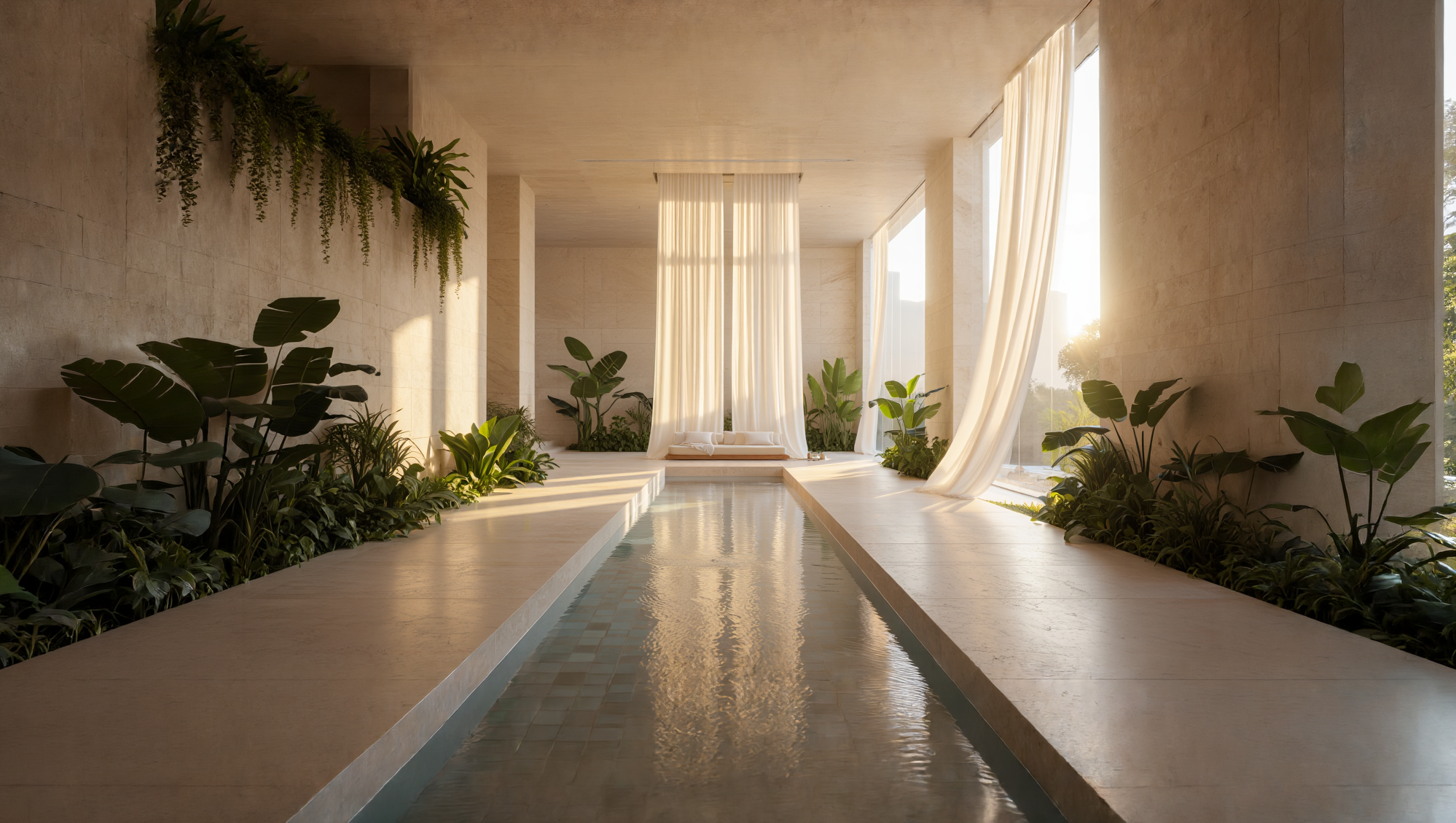
Images generated with Reve AI. Used here to expose and question dominant representations of calm in design.
The object of extraction has shifted. It is no longer only labor. It is attention.
I’ve found myself saying, more than once, that calm is the new luxury.
But I think I misspoke. Because calm is not a luxury. It is a condition. And like many conditions, it is unevenly distributed.
Beyond Lifestyle
Calm is often treated as a lifestyle. Something you choose. Something you cultivate. Something you access through the right practices, products, or environments. It appears in yoga studios, wellness spaces, retreats. It is associated with slowness, minimalism, and a certain kind of intentional living.
But this framing is limited. Because it assumes that calm is available to everyone in the same way. That it is simply a matter of preference, discipline, or awareness.
What if that is not the case? What if calm is not something you choose, but something that is either supported or undermined by the environments you move through?
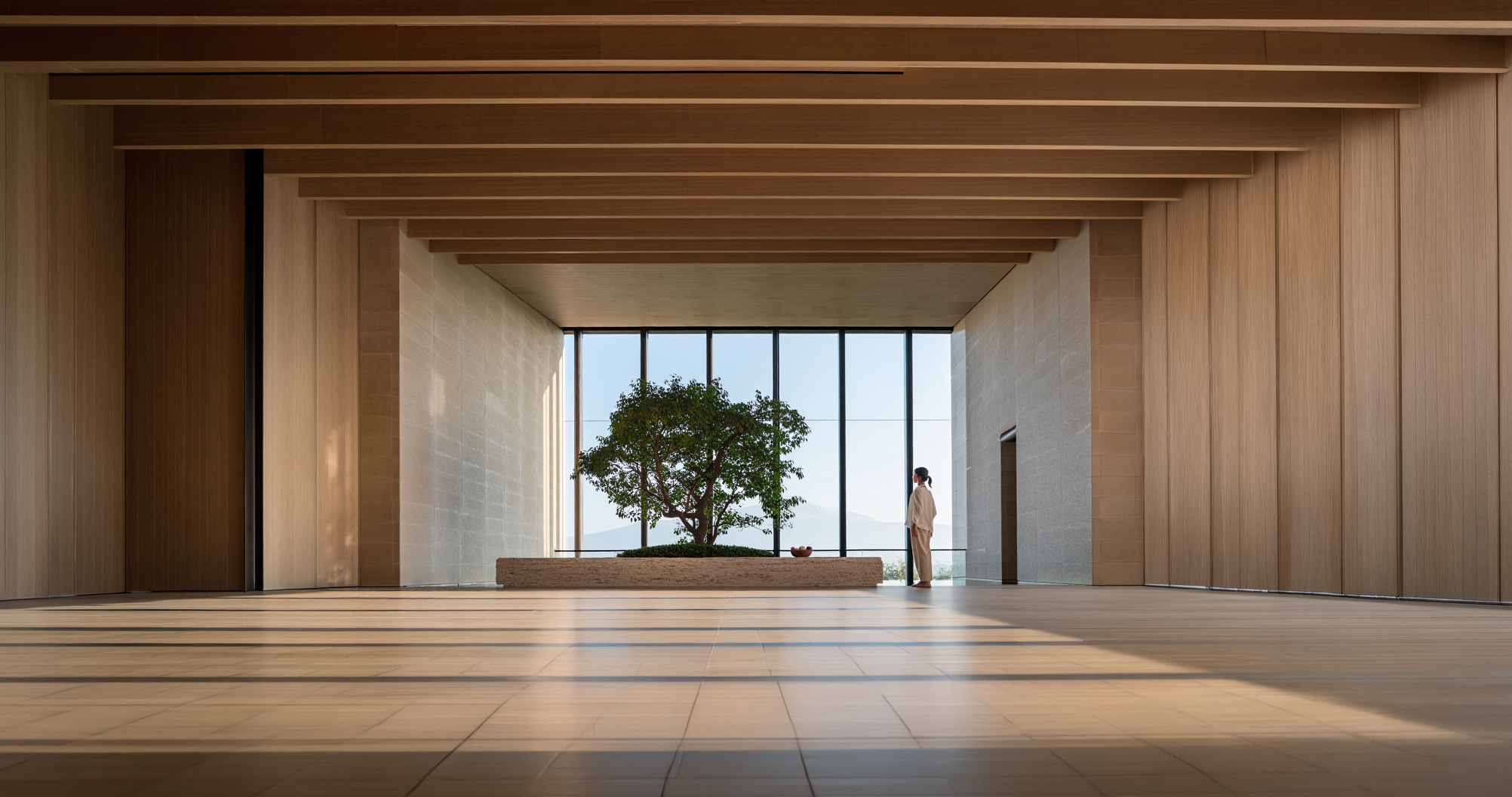
These are the images that often stand in for “calm.” Minimal spaces, soft light, controlled environments. They are not neutral.They reflect a very specific idea of who calm is for, and what conditions are required to access it. An aesthetic of calm that assumes privilege.
From Labor to Attention
In industrial economies, we learned to recognize how labor was extracted from bodies. Time, effort, physical energy. That extraction was not abstract. It was material, visible, and unevenly distributed.
In contemporary digital and commercial environments, something similar is happening. But the object of extraction has shifted. It is no longer only labor. It is attention.
Attention is continuously captured, redirected, fragmented, and monetized. Through screens, signals, notifications, spatial layouts, and interaction patterns, environments are designed to demand engagement. And, as with labor, this demand is not evenly distributed.
Some spaces minimize cognitive and sensory load. Others intensify it. Some allow attention to settle. Others keep it in a constant state of activation.
The result is a different kind of asymmetry. Not only in income or access, but in the very conditions of experience.
Designing Conditions
This is where calm design becomes something more than a question of aesthetics or usability. It becomes a question of conditions.
- Conditions of time: how fast or slow interactions unfold, whether pauses are possible, whether everything demands immediacy.
- Conditions of space: how environments distribute stimuli, whether they invite focus or fragmentation, whether they allow presence or enforce distraction.
- Conditions of the body: how systems engage perception, posture, movement, and fatigue, whether they respect limits or override them.
These conditions are not neutral. They are designed. And they shape what kinds of attention, and ultimately what kinds of lives, are possible within them.
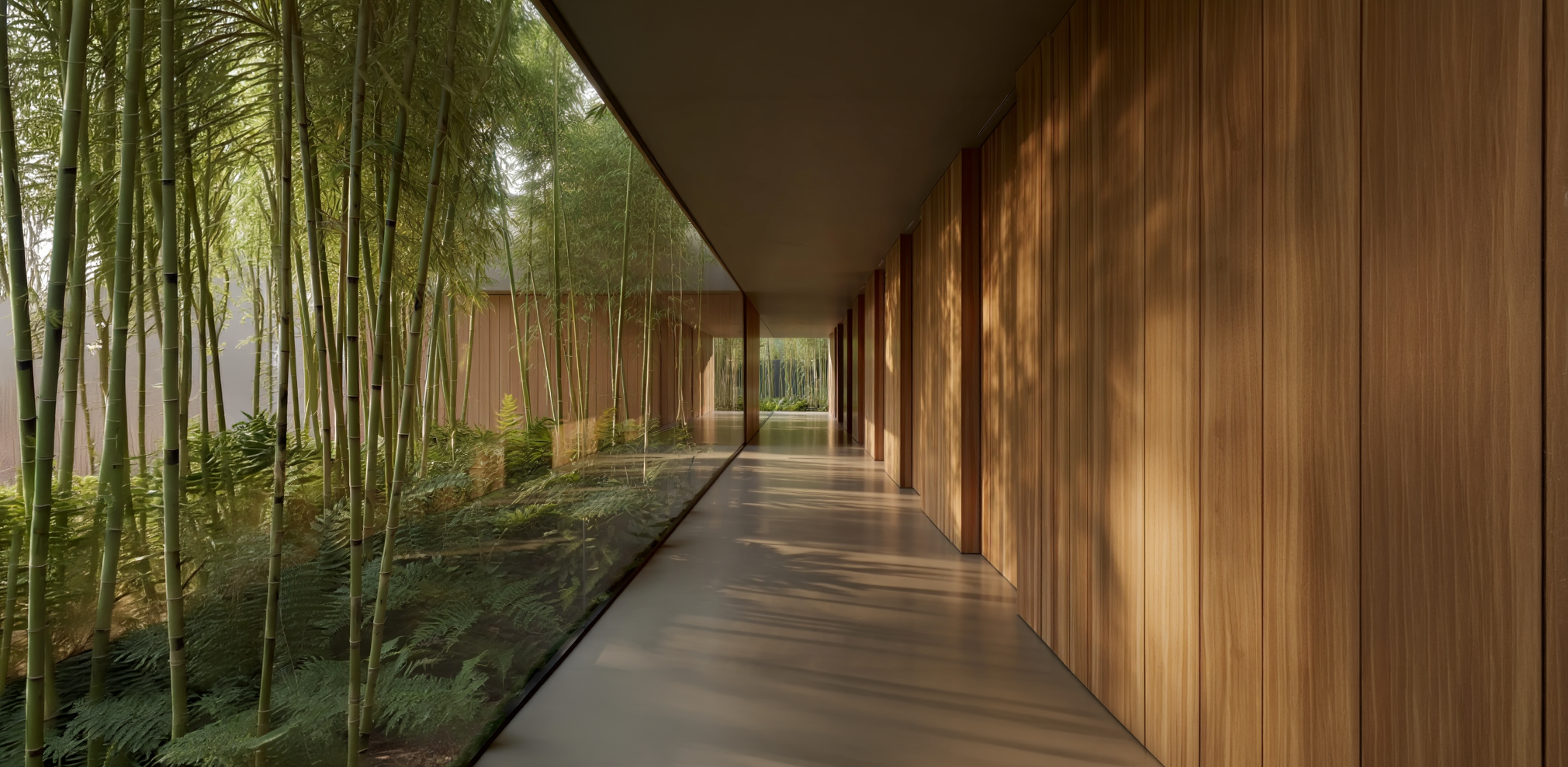
Image generated with Reve AI. it is intentionally constructed to reflect a dominant visual language of “calm” in design culture: minimal, controlled, and often detached from the conditions most people navigate daily.
A Different Question
If calm is treated as a lifestyle, it remains optional. Something to aspire to, purchase, or practice when possible. But if calm is understood as a condition, the question changes.
It is no longer about how individuals can become calmer. It becomes a question of how environments are structured, and for whom:
- Who gets spaces that protect attention?
- Who is exposed to constant demand?
- Who can withdraw, and who is continuously addressed?
At this point, calm stops being a matter of taste. It becomes a matter of distribution.
The Architecture of Calm
From this perspective, calm design is not only about adding quietness to already noisy systems. It is about rethinking the architecture that produces noise in the first place.
It is about questioning the assumption that more signals, more prompts, and more engagement are always desirable. And it is about recognizing that designing for calm is not simply designing for comfort.
It is designing for the possibility of attention that is not constantly captured. For time that is not continuously fragmented. For bodies that are not perpetually activated.
In that sense, calm is not a luxury. It is an infrastructural quality of the environments we build. And like any infrastructure, it can be unevenly distributed, systematically reinforced, or intentionally redesigned.
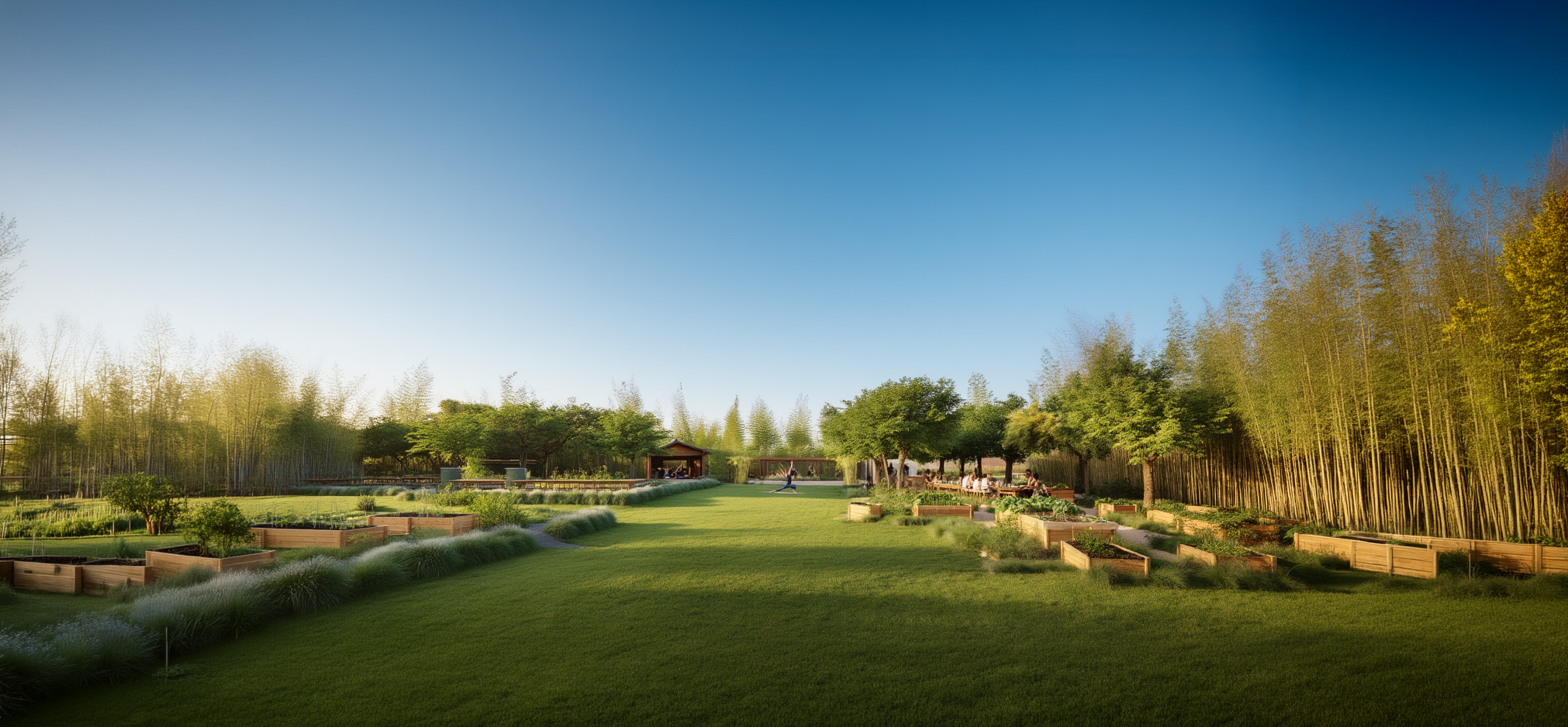
Image generated with Reve AI. it reproduces a familiar aesthetic of calm: clean, quiet, curated spaces that often assume a very specific social and material context.
A Final Turn
If earlier forms of inequality were organized around access to resources and control over labor, we may be entering a moment where something more subtle is at stake: the distribution of attention itself.
Not only who has time, but who has uninterrupted time.
Not only who has access, but who has space to think, to rest, to not respond.
In that context, calm design is not a niche concern. It is a way of asking what kinds of conditions we are normalizing, and who those conditions are designed for.