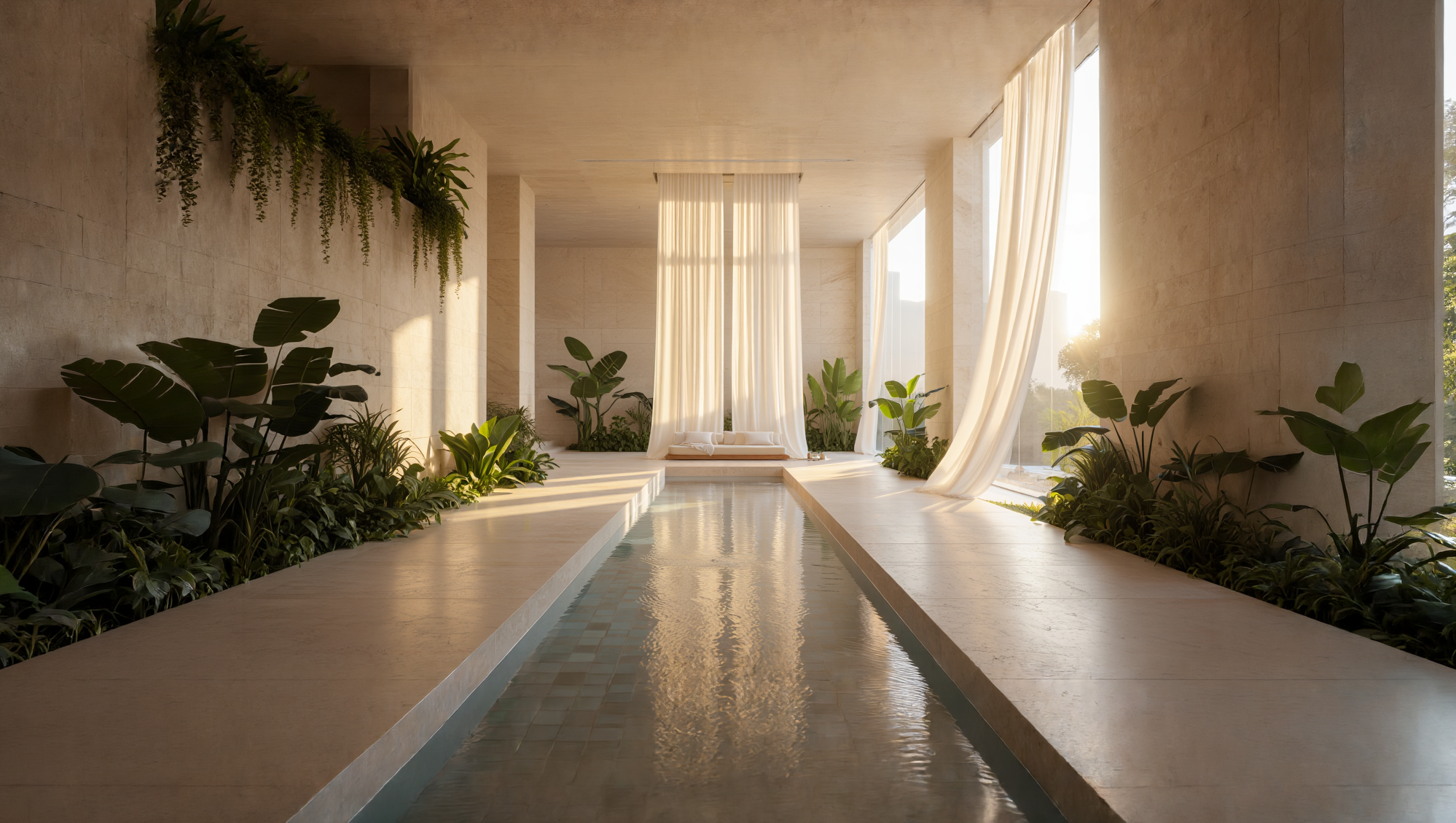
Attention does not happen in isolation. It emerges from the systems and environments we design around it.
Calm is not the end state, it is what makes other states possible.
We tend to talk about attention as if it were something people have. Something they manage, lose, or fail to control. But what if attention is not something the user owns? What if it is something we design?
This is the starting point of the Calm Design framework I’ve been working on. It focuses on how attention is shaped by the conditions around it, rather than on reducing distraction or improving focus. From this perspective, the question shifts from “how do we help users manage their attention better?” to “what kind of attention are we making possible here?”
Attention is Not a Resource
Most approaches treat attention as a finite quantity, something to capture, optimize, or preserve. Calm Design takes a different position: attention is not a resource, it is infrastructure.
It is relational, distributed, and shaped by design decisions. It expands or contracts depending on conditions, fragments under certain structures, and becomes sustained under others. And importantly, it is not neutral. There are different qualities of attention. Some are narrow, urgent, reactive. Others are open, sustained, or reflective. The role of design is not only to “get” attention, but to participate in shaping its quality.
Behind every interface, there is a structure. Not all of it is visible, but all of it affects attention.
Calm as a Condition
Calm is often misunderstood as a goal, a state to achieve, something close to silence, slowness, or disengagement. In this framework, calm is something else. Calm is a condition of openness, a moment in which attention is no longer being pulled or fragmented and becomes available. From there, many things can happen: engagement, immersion, reflection. Calm is not the end state, it is what makes other states possible.
This distinction matters for practice. If calm is treated as a goal, it becomes something to optimize for, another destination in the experience. If it is understood as a baseline, the role of design changes. Not to produce calm as an outcome, but to make it structurally possible, to remove the conditions that prevent openness, and to protect it once it appears. Calm, in this sense, is not always present, but it should always be allowed.
Designing Beyond the Screen
Another shift the framework proposes is where design actually happens. It extends beyond the interface and into three dimensions that are always already present: time, space, and body.
Time is considered as experience, not only as duration or speed. Not everything needs to be segmented into tasks. Some of the most calming experiences include elements that simply continue, sounds, light, rhythms that exist without asking anything from us.
Space is approached as environment, not just layout. Where is the user when this happens? What else is present? What competes for attention, and what supports it?
The body is treated as a sensing, moving presence, rather than just a finger tapping a screen. Attention is always embodied, even when design ignores it.
As we begin to work across these dimensions, interaction design starts to shift. The focus moves away from optimizing interfaces and toward composing conditions.
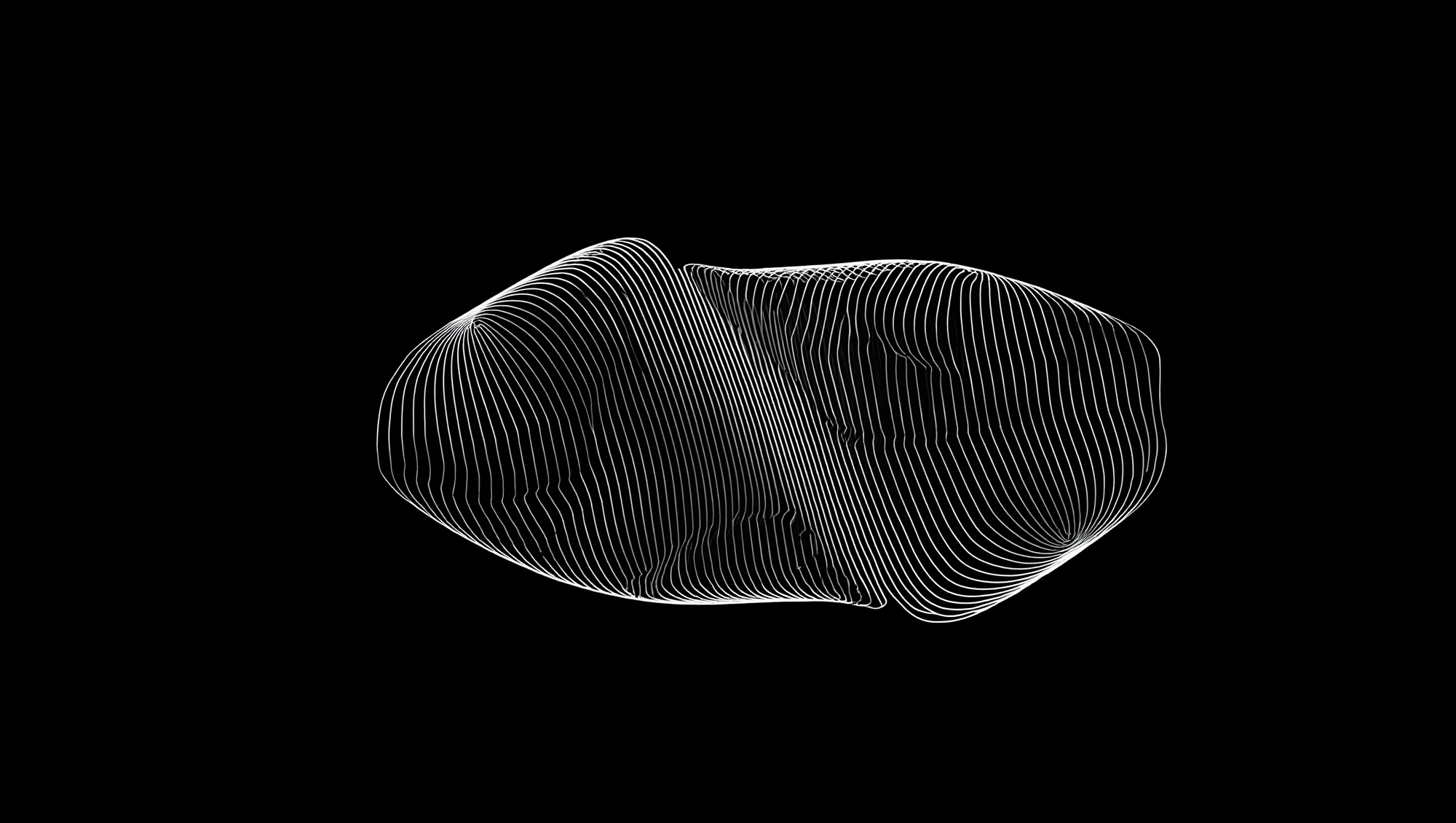
Abstract structures that resemble data. What we often treat as neutral is already shaping how attention behaves.
Attention Moves
Attention is never static. It moves between different states depending on what is being designed around it. Sometimes it is captured, held in loops that extend beyond intention. Sometimes it is overwhelmed, fragmented by too many demands. Sometimes it is calm, available. Sometimes it is engaged, fluid and outward. Sometimes it is deeply immersed, or turned inward.
These are not personality traits or individual failures. They are outcomes. And if they are outcomes, they can be designed for, or designed against.
A Structural Responsibility
There is a moment that often goes unnoticed. When attention is calm, it is open. And when it is open, it is also vulnerable. This is precisely the moment many systems use to pull users back in: a notification in a quiet moment, a suggestion right after finishing something, a hook placed when the system senses availability.
Calm Design does not ignore this. It names it. Because designing for calm without considering how easily it can be exploited risks reinforcing the same extractive dynamics it tries to move away from.
This is where the framework takes a position. The problem is not that users fail to manage their attention. The problem is that we design conditions that systematically capture or fragment it, and then expect users to compensate.
Patterns that resemble data, yet behave more like atmosphere.
On Calm and Practice
There is another layer to this conversation. Calm is not only something that can be supported by design, it can also be cultivated through practice. Anyone who has spent time with meditation or yoga knows the difference between being calm in a quiet environment and remaining stable in the middle of a demanding one.
That difference matters, but it also reveals something. If calm requires continuous effort just to withstand the conditions around us, then those conditions are part of the problem.
Calm Design does not replace personal practice. It does something more basic. It asks that we do not design systems that work against it, that we do not create environments where attention is constantly pulled, fragmented, or destabilized, and then rely on individual discipline to repair the damage.
In that sense, this is not about making people calm. It is about making calm more accessible.
An Ongoing Work
This framework is still evolving. I’ve been developing it through research in semiotics, material practices in contemporary art, and ongoing work in interaction design, as well as through writing, teaching, and applied projects.
In the coming months, I’ll share more about how it can be used in practice, not only as a way of analyzing existing products, but as a way of designing differently from the start. If you want to explore this work in a more applied way, you can join the upcoming workshop here.
For now, this is an invitation to look at attention not as something to capture, but as something we are already shaping, whether we realize it or not.