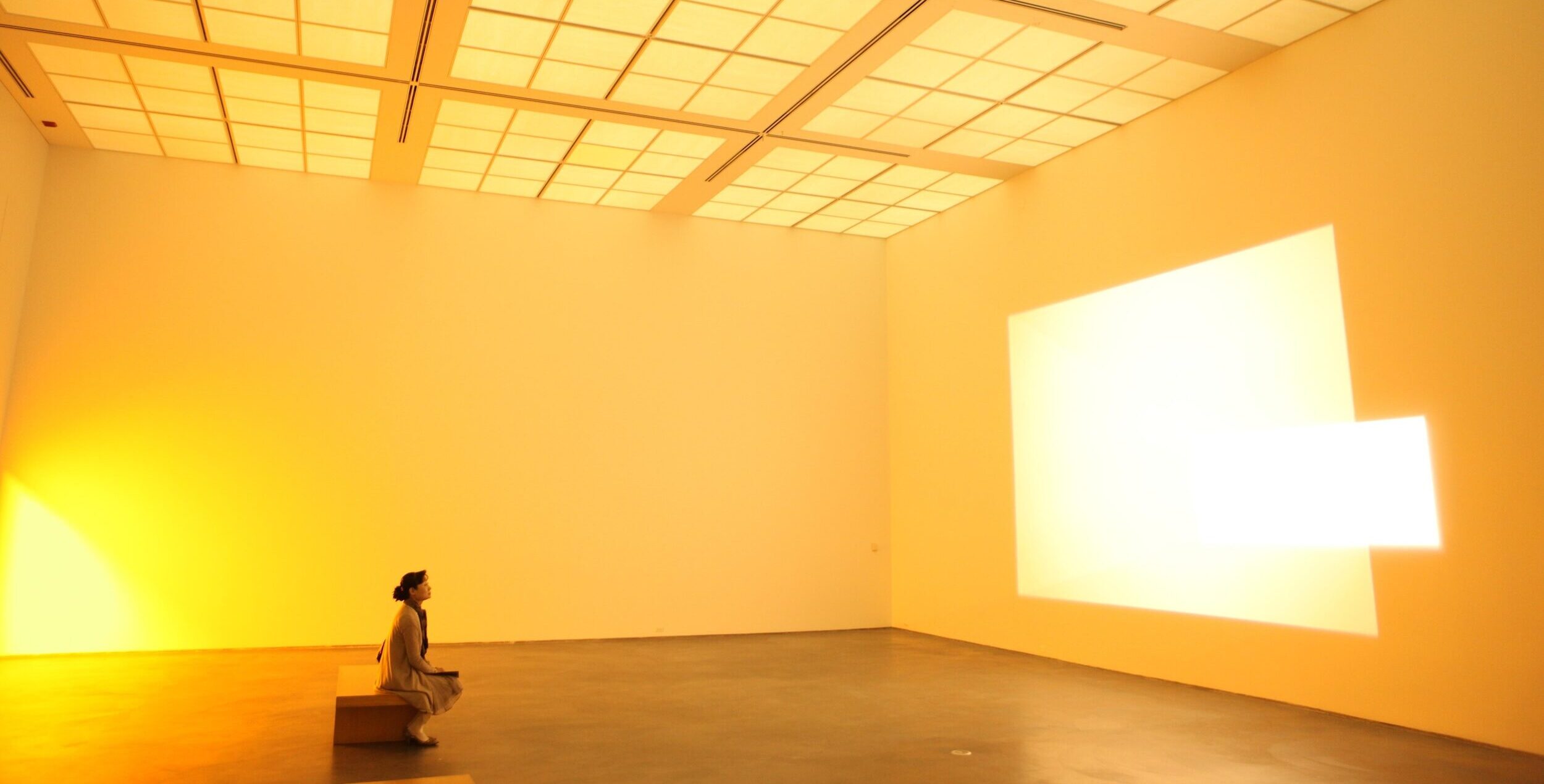
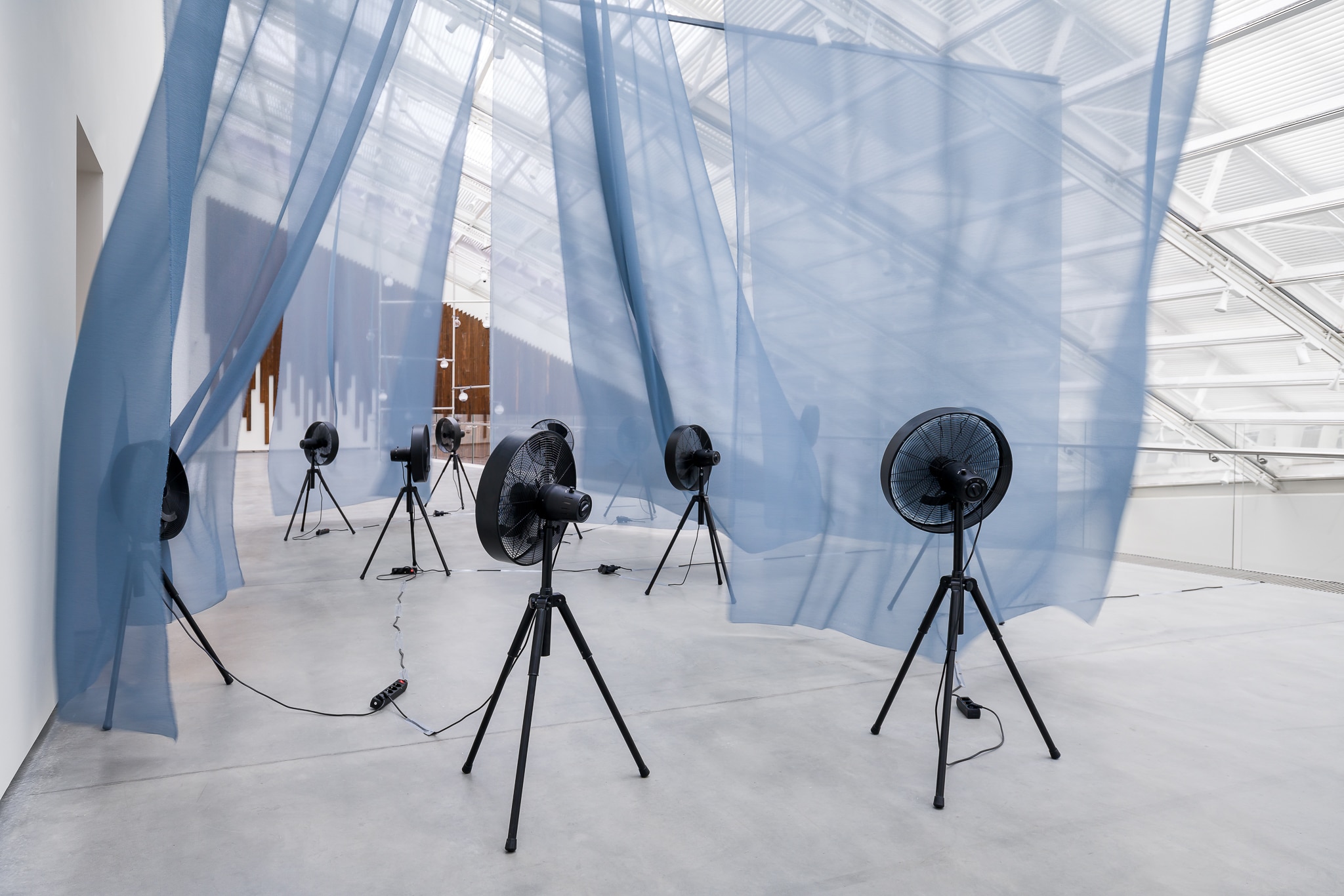
In Take your time, Olafur Eliasson turns simple mechanisms into perceptual triggers. His work invites viewers to slow down and reimagine the boundaries between nature, culture, and self, one sensory shift at a time. Photo: MCA Chicago
A design research project exploring how material practices can shape digital experiences toward presence, attention, and calm.
Research Program: Material Attention
Collaborators: Developed in collaboration with the Faculty of Fine Arts at the Polytechnic University of Valencia
Duration: 2 years
Presented at Simposio INTRA-ACCIÓN, EINA, Barcelona
Read time: 6 min
Materials are not neutral carriers of content. They are what attention is made of.
Design today is addicted to stimulation. Every swipe, ping, and nudge demands attention, yet so little of it nourishes presence. We have built entire industries around capturing focus and almost none around returning it.
Calm Matters is a long-term investigation into what contemporary art already knows about attention that interaction design has forgotten: that materials are not neutral carriers of content. They are what attention is made of.
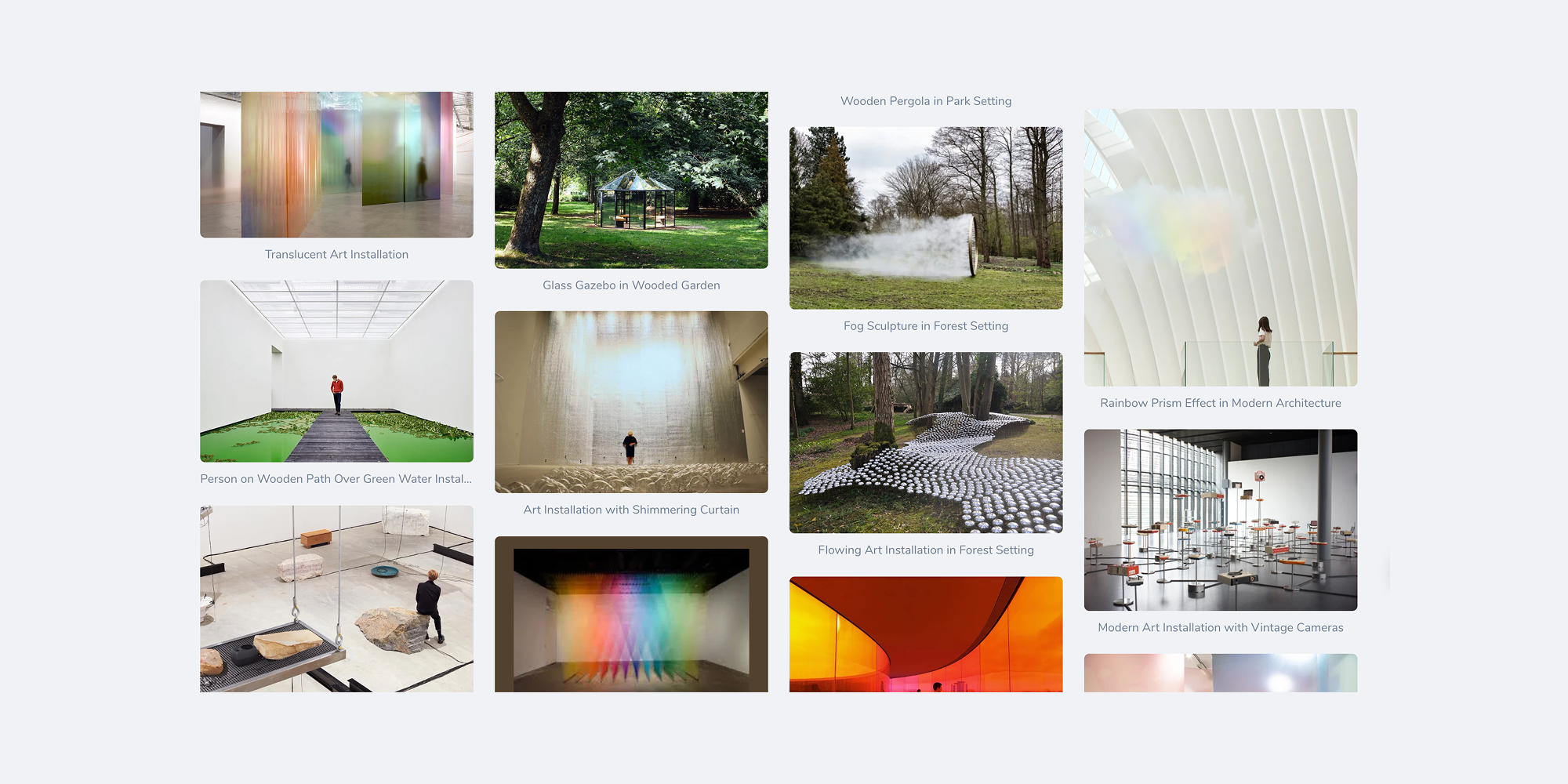
A selection of contemporary artworks exploring how materials can shape the conditions of attention and experience.
Change the material, and you change what a person feels, notices, and remembers long after the screen goes dark.
A METHOD BUILT FROM ART, MADE FOR DESIGN
Calm Matters didn’t start as design theory. It started by looking closely at contemporary artworks that already do, instinctively, what digital design struggles to do on purpose: hold attention gently, without gripping it.
Grounded in doctoral research on site-specific artistic practice, the project set out to translate that instinct into something a designer could actually use.
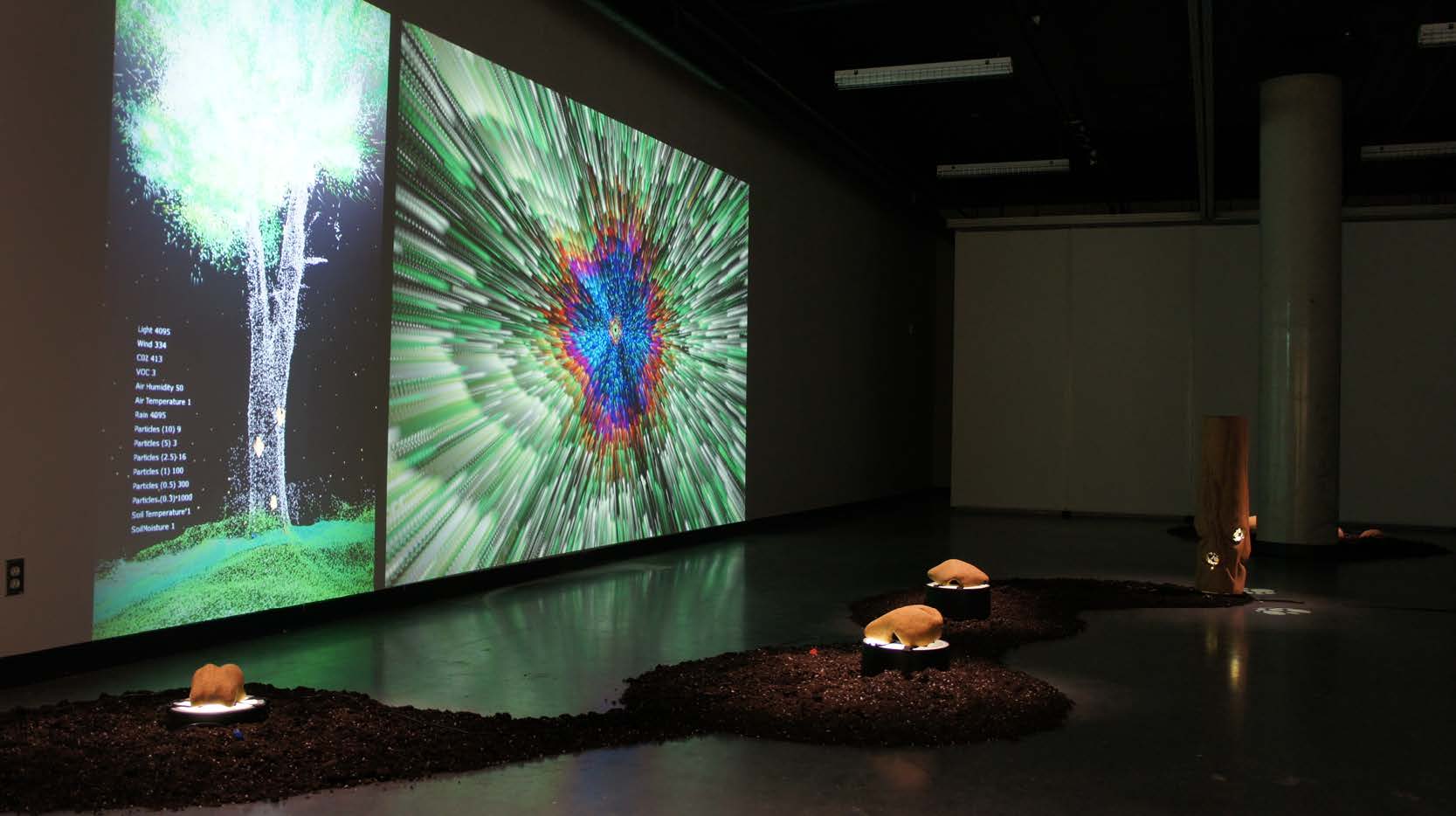
Foresta inclusive: (ex)tending towards, installed at the Ottawa School of Art Gallery Orléans, 2024, by artist and curator Jane Tingley, with sound design by computational artist Hrysovalanti Fereniki Maheras (Hryso). Tingley’s practice combines traditional studio methods with responsive and interactive technologies, exploring the boundaries between science and magic, interactivity and playfulness. The installation invites visitors to enter an audiovisual forest environment in which their movement influences the work, creating a responsive relationship between body, light, sound, and the simulated forest.
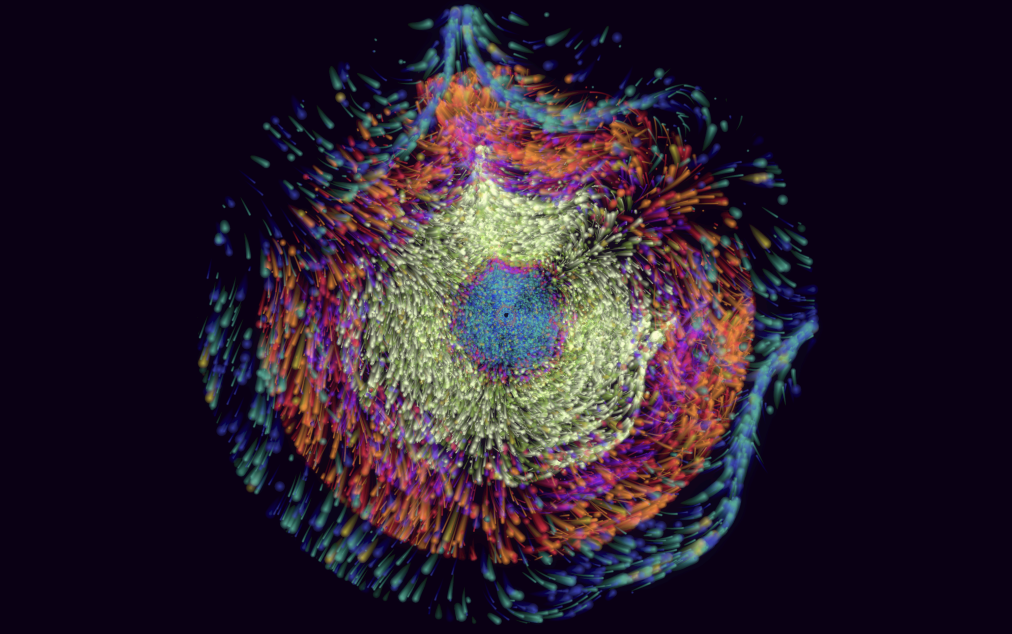
The installation is designed to encourage slower, more attentive movement. Rather than requiring visitors to remain still, the work makes the quality of their movement part of the experience: slowing down allows the environment to become more perceptible and responsive. Calm therefore emerges not simply from the aesthetic qualities of the installation, but from the interaction itself. This is particularly relevant to Calm Design as an example of an environment in which the way we engage becomes part of what regulates our attention.
THE Attentional Materiality Matrix
That translation became the Attentional Materiality Matrix: a 90-criteria framework across four levels: presemiotic, rhetorical, thematic, and enunciative. Rather than a rigid framework, it proposes a way of seeing, a material lens for reimagining how we design.
It isn’t a scoring system, and it doesn’t optimize or rank. Run an interface, a space, or an experience through it, and it surfaces the material decisions doing the work underneath: the rhythm of a transition, the weight of a silence, the texture that makes someone linger instead of leaving.
It predates Calm Design Lab’s broader framework. It’s the ground it was tested on. Several of the lab’s core material principles were first proven here, against real artistic practice, before they were generalized into theory.
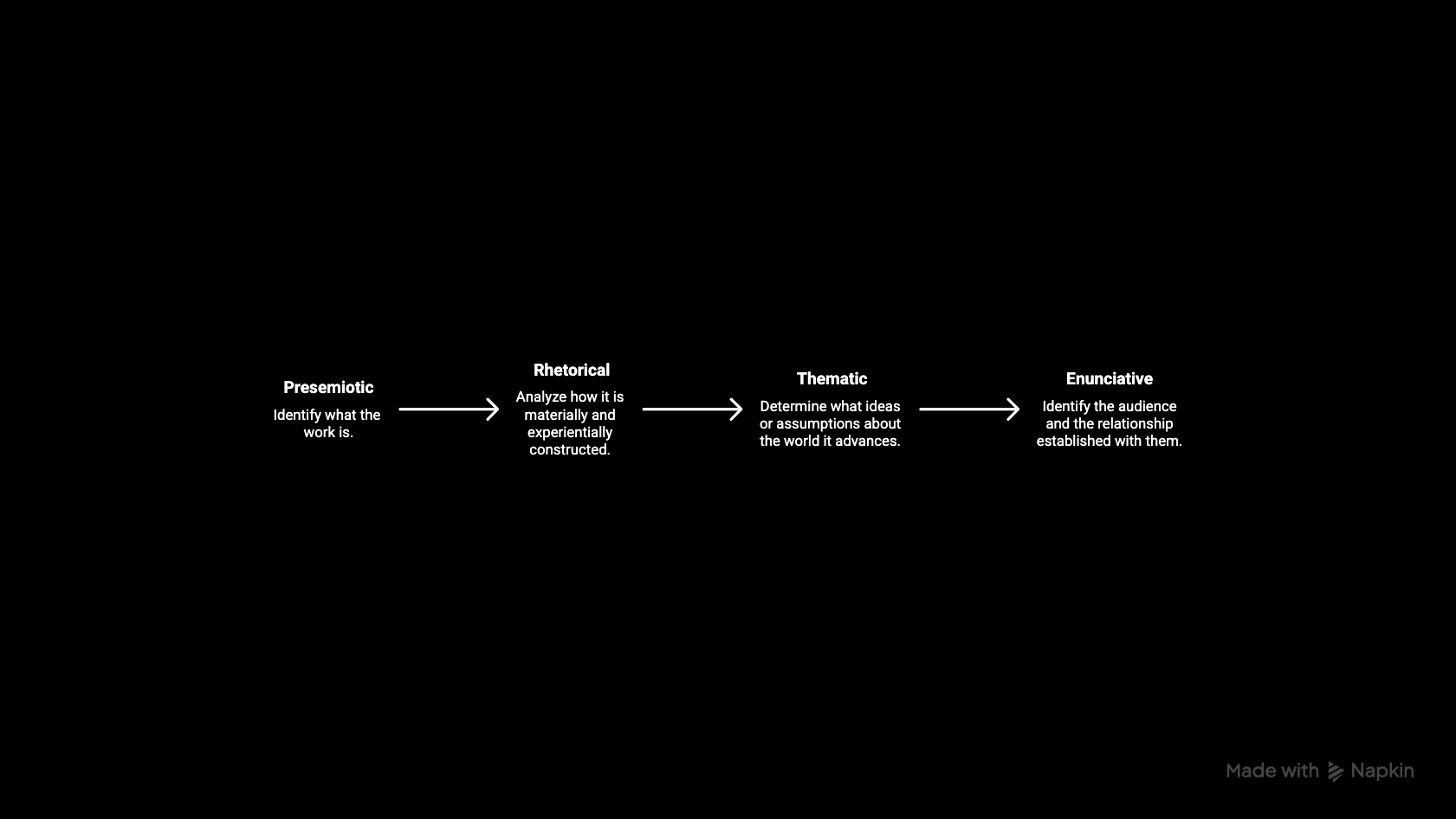
Use the four levels to gradually move from observation toward interpretation. Individual criteria are less important than the relationships between them. Notice where material choices reinforce one another, where they create tension, and where one strategy produces consequences across several dimensions. The matrix becomes most useful when applied to multiple works. Compare your observations across works rather than treating each analysis as an isolated assessment.
A SEMIOTIC LENS, NOT A SCORING SYSTEM
The matrix draws its structure from semiotics, not from usability heuristics. It asks what a work means and how it produces that meaning materially, not whether it performs well against a checklist of best practices. That’s a different kind of question, and it rewards a different kind of use: close, comparative, and slow.
It’s most useful to researchers and design scholars building rigorous case studies, educators looking for a structured way to teach close reading of objects and interfaces, designers searching for material references before starting new work, and critics or writers who need precise language for why something feels the way it does.
It isn’t built to audit your own product, for that, look to Calm Design Lab’s Calm Audit. It’s built to help you see, compare, and name what’s happening materially in work that already exists.
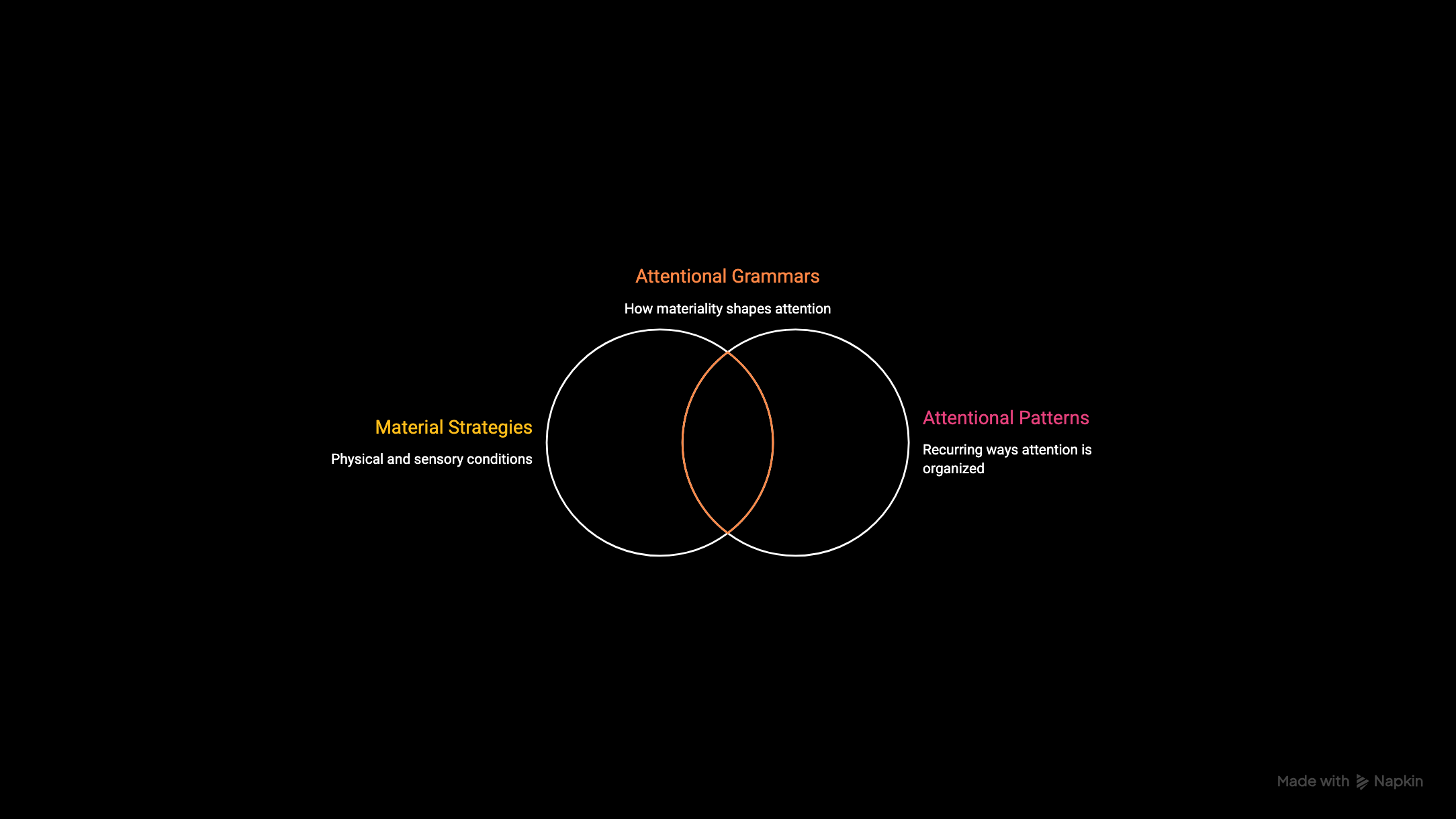
An attentional grammar is a recurring way of organizing the conditions through which attention becomes possible. It may involve material choices, spatial arrangements, temporal structures, sensory qualities, interaction patterns, forms of communication, or assumptions about the person encountering the work.
PRINCIPLES FOR DESIGNING WITH MATERIALITY
These aren’t rules, they’re a way of paying attention. Each principle names something contemporary art already knows about materials, and asks what changes when interaction design takes it seriously.
Expanded Materiality
Materiality isn’t only physical matter. It includes ephemeral forces too: light, sound, temperature, time, even data. These immaterial elements shape some of the most resonant experiences a person can have.
Materiality becomes multidimensional: physical, intangible, environmental, cultural, computational. Calm Design treats materials not as tools to be used, but as co-creators of the experience itself.
Smell becomes matter in RE________, where Sissel Tolaas transforms invisible molecules into material for thought. With over 10,000 archived compounds and a growing lexicon of 4,200 terms, she crafts immersive installations that speak through the chemistry of air—inviting visitors to breathe, feel, and remember. Photo: Christian Øen.
Algorithmic Materiality
Digital systems can give intangible elements real weight. Algorithms can modulate light, rhythm, behavior, and movement in ways that feel tactile, even immersive.

Pollinator Pathmaker Garden at Eden Project Cornwall by Alexandra Daisy Ginsberg. Here, the algorithm’s logic becomes living matter. Ginsberg’s garden is more than a habitat. it’s a sculptural field of co-evolved forms, each chosen not for human delight but for how it feels, smells, and shines in ultraviolet to a bee or a butterfly. Materiality unfolds through petals, pollen, and presence. Photo: Royston Hunt
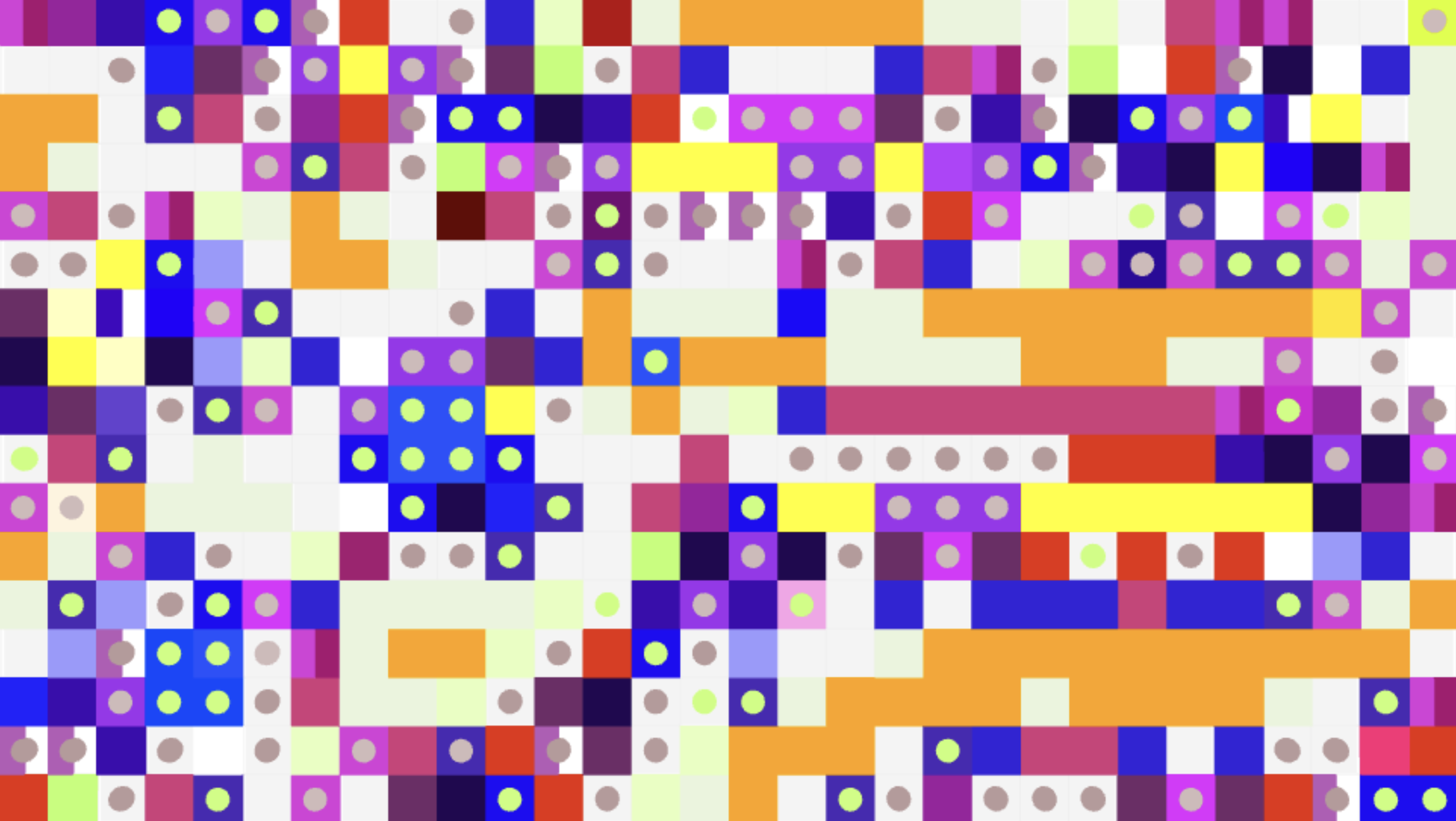
Planting Plan Created by the Pollinator Pathmaker Algorithm. Ginsberg uses code as a material, shaping a visual language attuned to insect perception. This planting plan, generated by her empathy-driven algorithm, transforms data into form, colors, textures, and bloom rhythms mapped from the sensory worlds of pollinators. It’s a blueprint where materiality begins in logic but blossoms in soil.
Nature-Inspired Thinking
Nature never designs in silos. It adapts, blends, co-evolves, and drawing from natural systems pushes design toward something more organic and interconnected.
Calm Design borrows from nature’s capacity for mutual care. Rather than isolated solutions, it favors ecosystems: adaptive, layered, symbiotic.

GLOWING NATURE, Studio Roosegaarde, 2016. The installation uses bioluminescent algae as a living material, creating an immersive environment in which visitors can observe the organisms’ natural response to movement and environmental stimuli. Rather than representing nature through form or imagery, the work incorporates a biological process directly into the experience, bringing together living matter, technology and human presence. The subtle interaction invites visitors to slow down and notice the relationship between their movement and the living system around them, making nature inspired design a matter of responsiveness, material behaviour and ecological attunement.
Context Awareness
Design should emerge from its surroundings, not float above them. Real environments —not abstractions— produce interactions that feel intuitive, situated, and emotionally attuned.
Design grounded in context is less invasive and more legible. Ambient light, acoustics, cultural cues, environmental feedback: good design emerges from the world rather than overriding it.
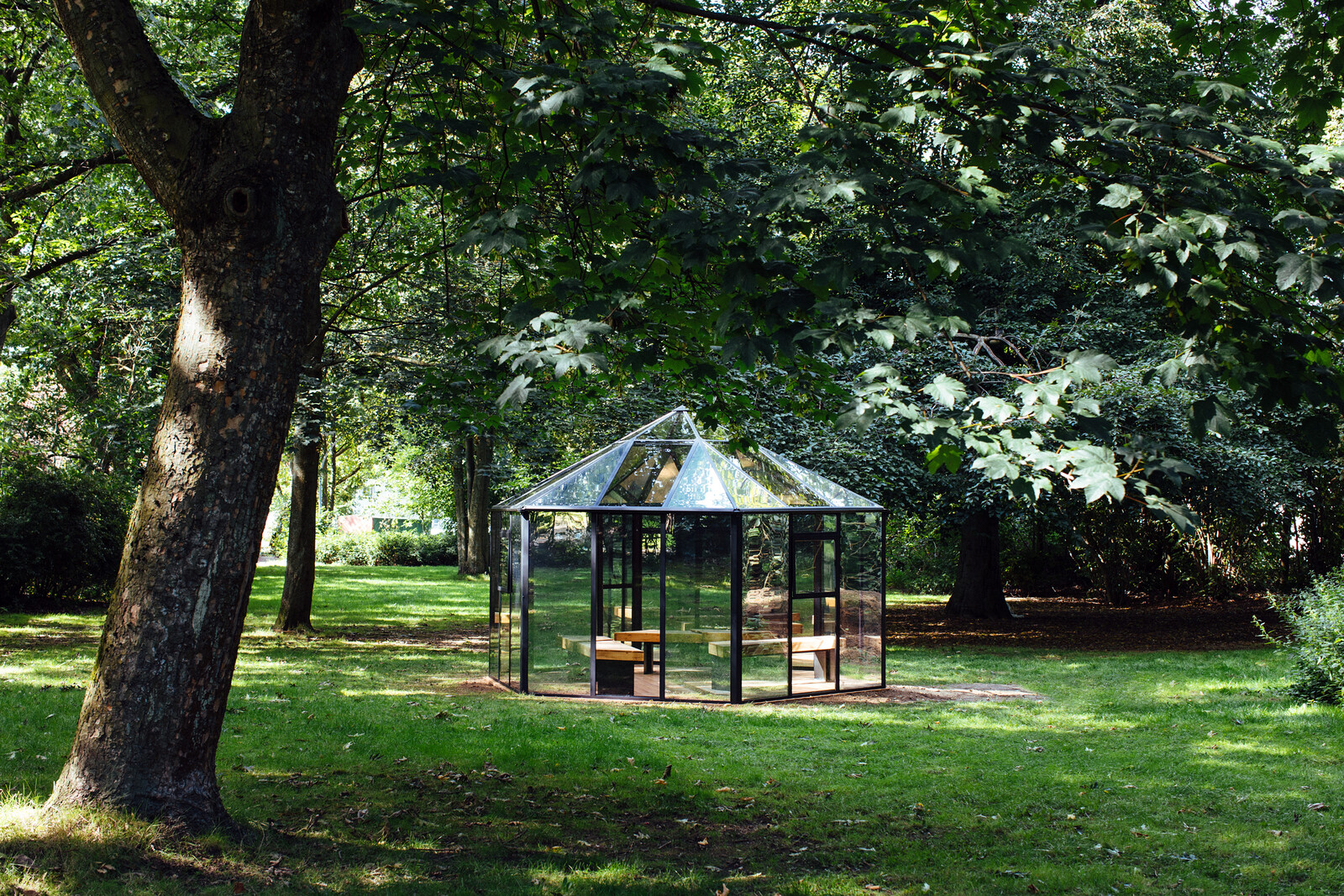
Camille Norment’s Glass Pavilion Marl stands quietly within Sculpture Park Marl, a transparent structure that blurs boundaries between inside and out. Purpose-built for this site, it offers a contemplative space where architecture, sound, and landscape merge. Photo: Bozica Babic.
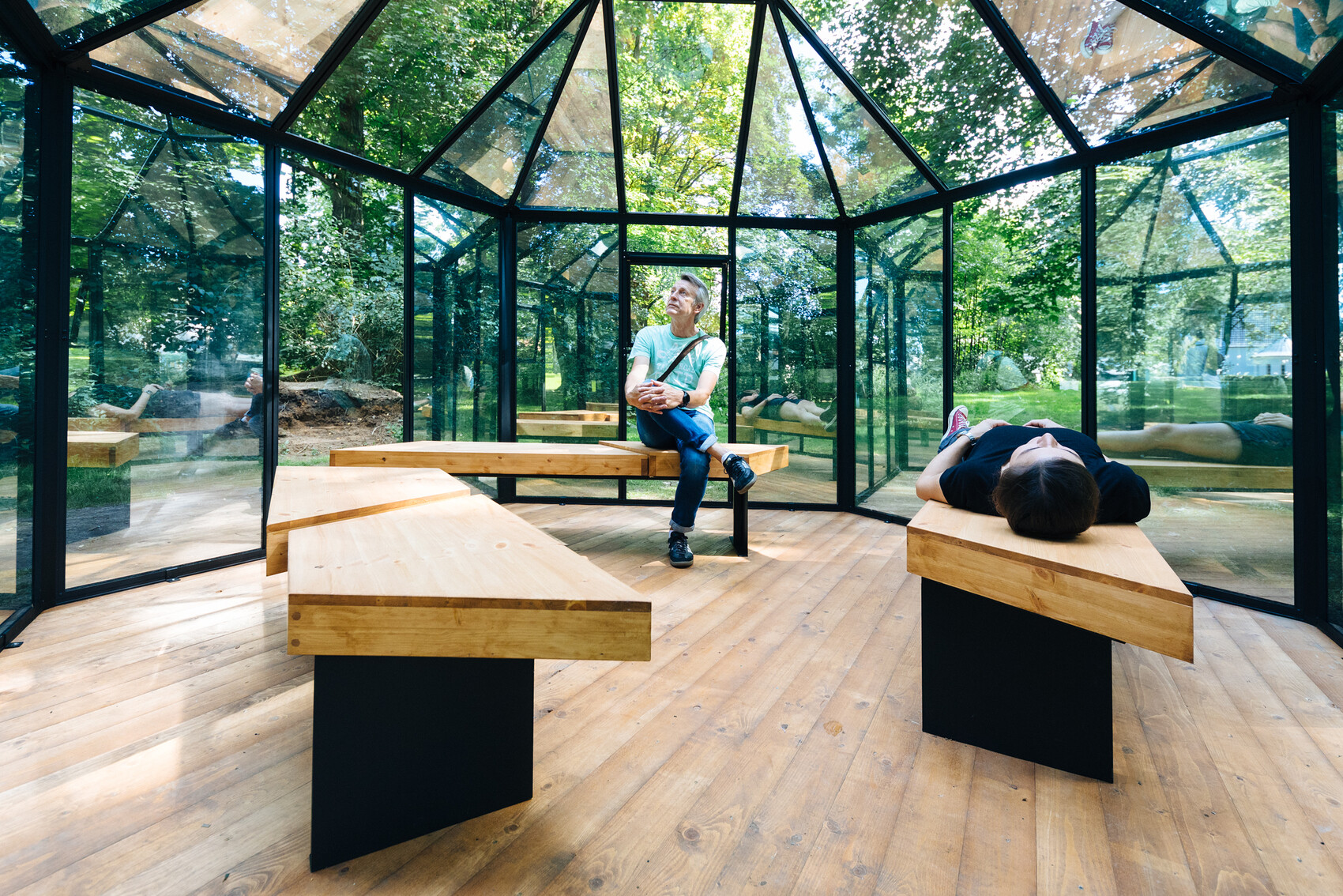
Inside Glass Pavilion Marl, a polyphonic voice composition unfolds in layered tones. The glass walls let in the world, but the sound invites you inward—a subtle suspension of time, where listening becomes a deeply spatial experience. Photo: Bozica Babic.
Multi-Sensory Engagement
Digital design defaults to vision. But other senses carry information vision alone can’t: sound, touch, even smell. Calm Design distributes attention across senses instead of loading it all onto the eyes.
This is about which channels of perception a work speaks through. Calm Design widens those channels, weaving texture, light, sound, and rhythm into experiences that reach more than one sense at a time.
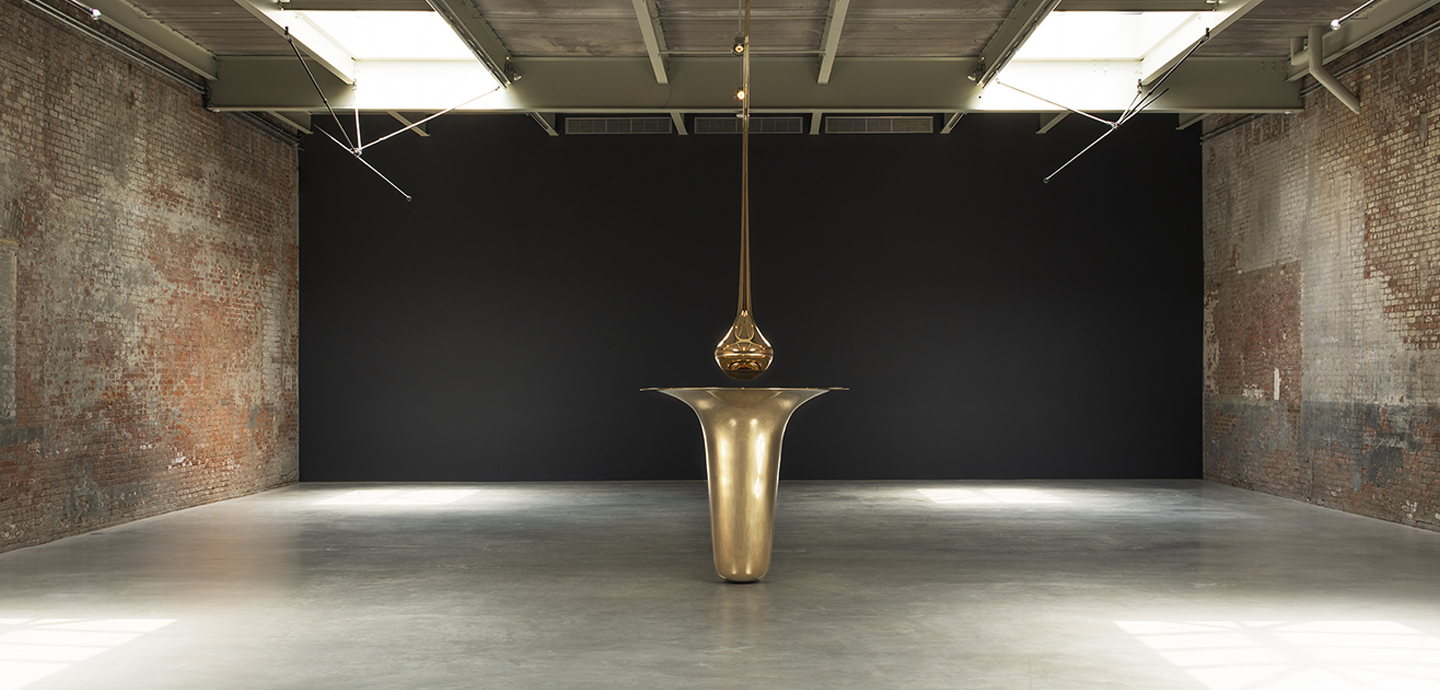
Plexus, Camille Norment, 2022, commissioned by the Dia Art Foundation for Dia: Chelsea. The two part installation combines sculptural forms, sound, vibration and the movement of visitors through the galleries. In one space, a brass sculpture uses microphones and feedback to respond to bodies moving nearby. In the other, monumental wooden structures carry a microtonal chorus that can be heard while moving through the space and physically felt as vibration when visitors sit or lie on the sculptures. The work therefore shifts listening beyond the ears, engaging hearing, touch, movement and spatial perception as interconnected modes of experience. Image by Bill Jacobson.
Thoughtful Friction
Friction isn’t always the enemy. Used with intent, it creates room for reflection, slowness, and mindful engagement. The goal was never seamlessness, it’s meaning.
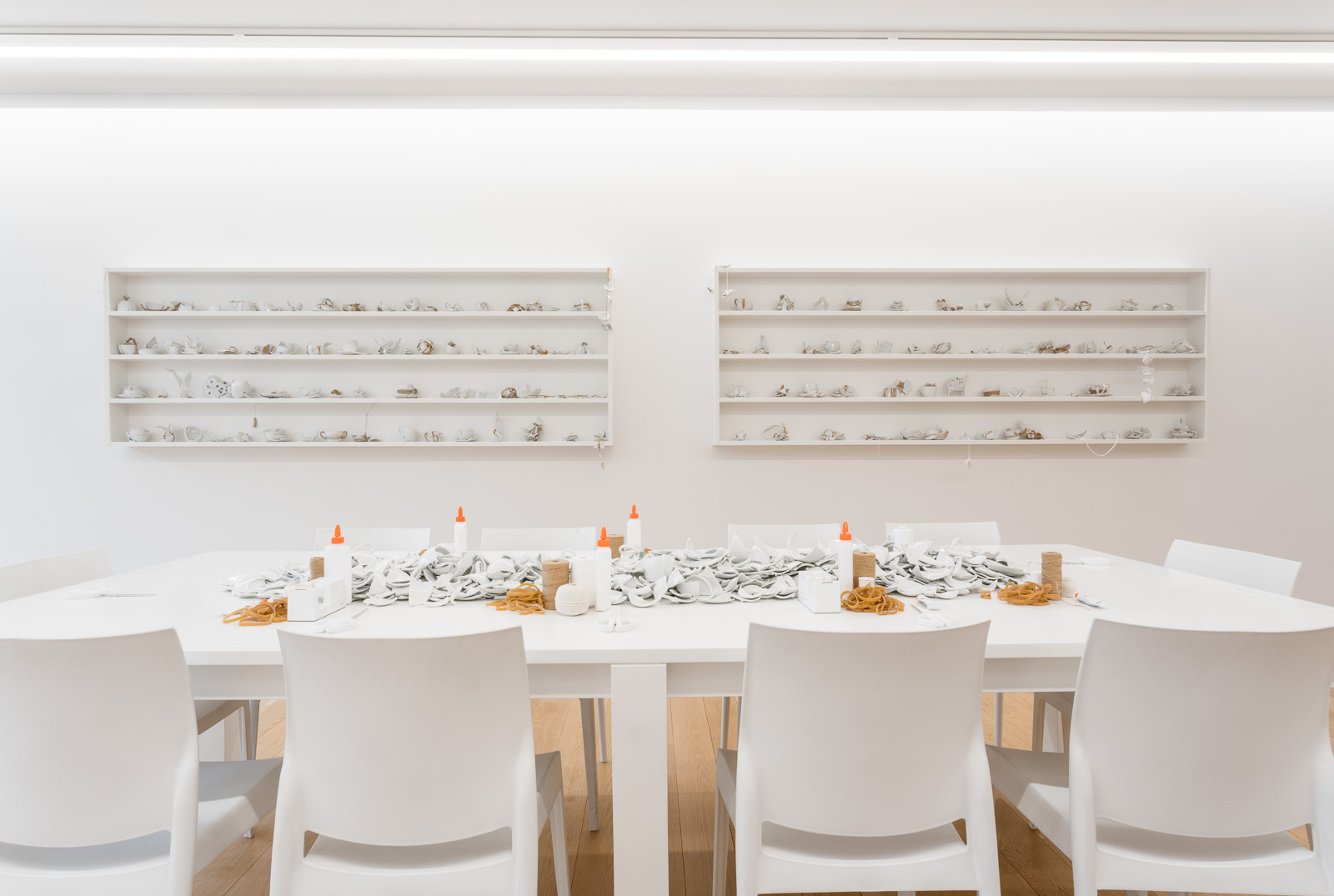
MEND PIECE, Andrea Rosen Gallery, New York City version (1966/2015), by Yoko Ono. The installation invites visitors to repair broken pieces of white crockery using simple materials such as glue and tape. Through this slow and deliberate act, participants encounter damage not simply as something to observe, but as something they can respond to and transform. The work creates a subtle form of thoughtful friction, holding together fragility and agency, disruption and repair. Rather than eliminating tension, the interaction invites visitors to stay with it through careful, attentive action.
Embodied Interaction
The body isn’t a passive observer, it’s part of the interaction. Calm often arises from feeling grounded in space: how a person stands, moves, or pauses in relation to what surrounds them.
This is about how the whole body inhabits an experience over time, not which senses it engages. Calm Design treats spatiality itself as a material. One that invites movement, rhythm, and pause, and builds presence through that bodily rhythm.
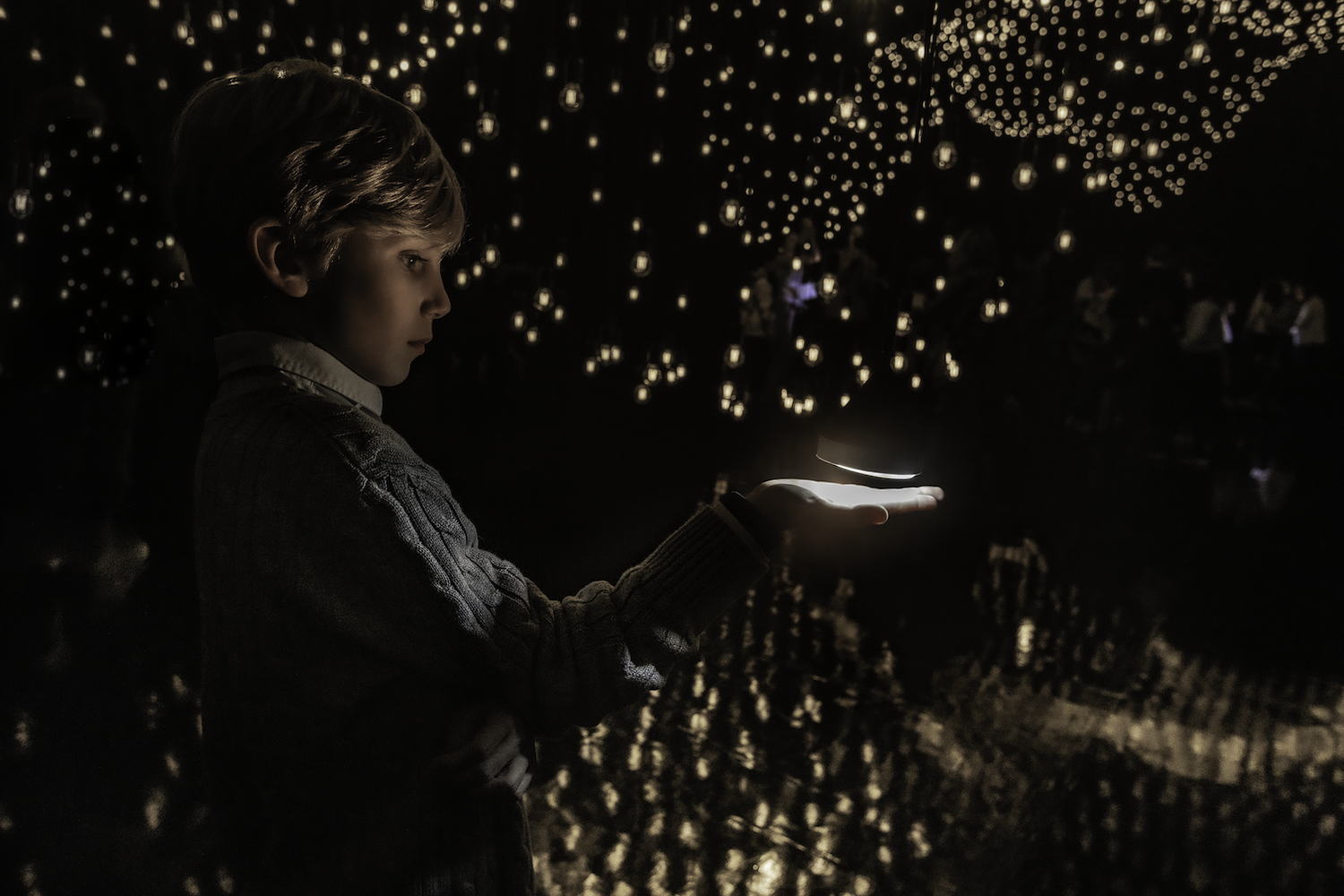
Pulse Topology, Rafael Lozano Hemmer, shown at Euphoria: Art is in the Air, Balloon Museum, La Nuvola, Rome, 2024. The installation consists of thousands of suspended light bulbs forming an immersive landscape that visitors can walk through. As a visitor approaches one of the sensors, the system detects their heartbeat without physical contact and translates it into light and sound. Their pulse then becomes part of the installation, joining the recorded heartbeats of previous participants. The work creates an embodied interaction by turning an otherwise invisible physiological process into something that can be seen and heard. In this sense, it evokes the logic of wearable technology, not through a device worn on the body, but by making the body itself the interface: the visitor’s physiological state becomes the means through which the environment responds.
Design Craftsmanship
Like a sculptor shaping clay, design interactions with care, patience, and intent. Local knowledge and handmade quality matter. They’re what make an experience feel connected to something, rather than assembled from parts.
Calm requires care. Designers aren’t only problem-solvers; they’re stewards of attention.
Cultivate craftsmanship, collaborate across disciplines, and the result is technology that feels intentional, respectful, human.

Pollinator Pathmaker, Alexandra Daisy Ginsberg, 2021 onwards. A living artwork designed for pollinators rather than humans, Pollinator Pathmaker begins with a deep study of the local environment and the species that inhabit it. Ginsberg works with horticulturalists, scientists and pollinator experts to develop regional plant palettes, translating ecological knowledge into an algorithm that determines which plants to select and how to arrange them according to the needs and behaviours of different pollinating species. The resulting design is then carefully translated from data into the soil, with each plant individually placed and tended. Here, craftsmanship lies not simply in the act of making, but in the care taken to understand the materials, context and relationships from which the work is made. The artist becomes a steward of an existing living system, demonstrating how attention, local knowledge and collaboration can become forms of design practice.
HOW THE METHOD WORKS
Calm Matters didn’t develop through a handful of case studies. The Attentional Materiality Matrix was applied, work by work, across a substantial body of contemporary art —installations, sound pieces, spatial interventions, sculptural systems— looking for what repeated.
Individual works are singular. But run enough of them through the same lens, and patterns surface: discursive recurrences —ways of using light, structuring silence, sequencing an encounter— that show up again and again, work after work.
Those recurrences are what let us speak of genres and styles at all: concrete, repeatable ways of making that produce predictability, a shared grammar an audience can recognize even without instruction.
That’s the wager Calm Matters makes for digital design: the same recurrences that let us describe a genre in art can be identified, named, and worked with deliberately in interaction design. Not by copying a single artist’s gesture, but by understanding the material strategies that keep resurfacing across many of them.
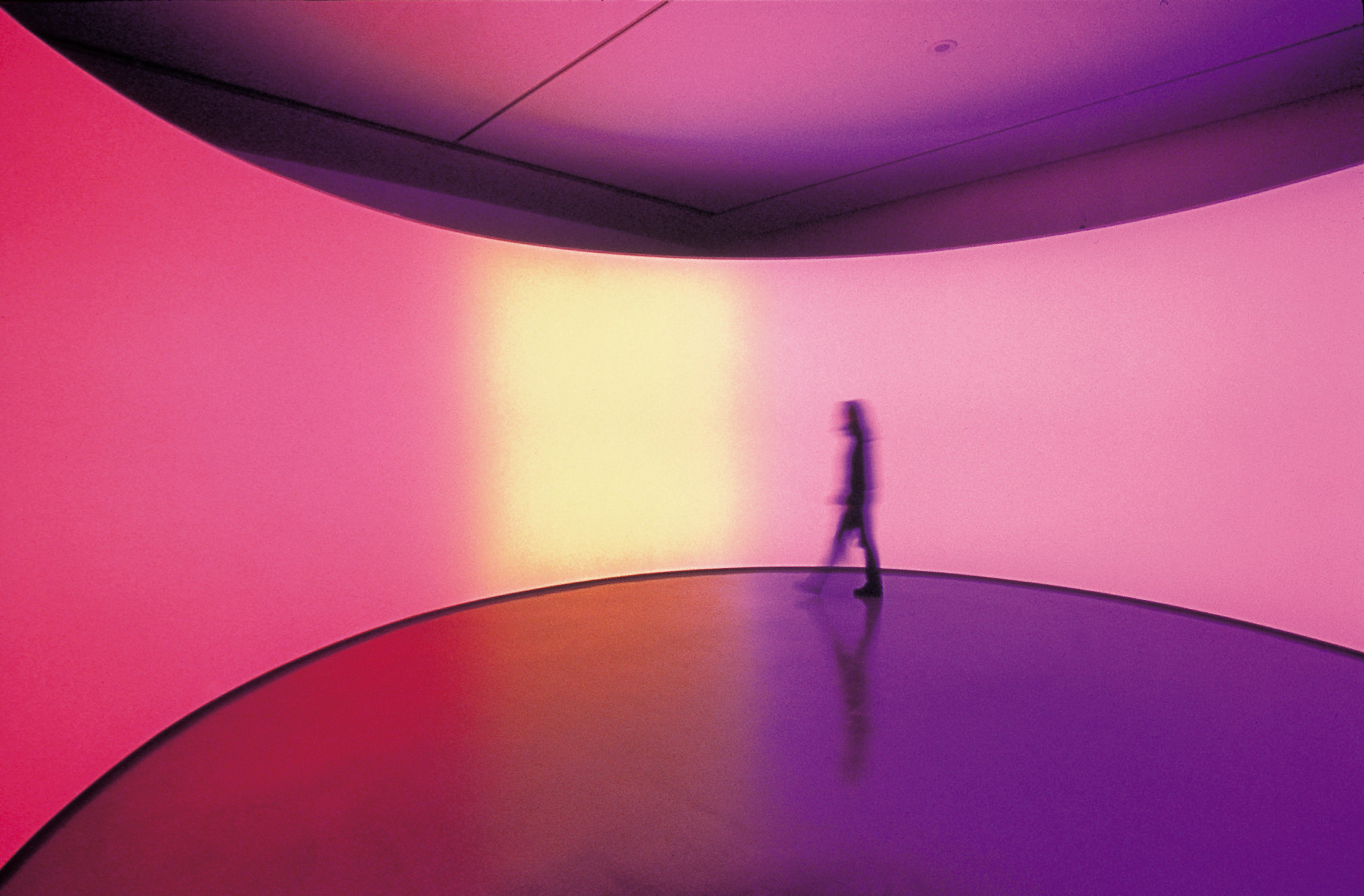
In Take Your Time, Olafur Eliasson turns light, water, stone, and moss into materials of perception, inviting viewers to linger in altered states of awareness. His environments do not depict nature, they recompose it, using geometry, reflection, and sensory phenomena to disrupt and deepen our grasp of the everyday. Light becomes sculptural, time stretches, and space feels momentarily unfamiliar. This material approach, grounded in experience rather than image, aligns with calm design’s call for presence, slowness, and attention. Eliasson’s work reminds us that materials can shift not only what we see but how we feel and how we relate to the world. photo: moma.
Ongoing Work
Calm Matters is part of Calm Design Lab’s Material Attention research program.
Calm Matters isn’t just a study of materiality. It’s a call to rethink how we build our digital worlds, and a step toward design that cares for attention as a shared, fragile resource.
This is an ongoing inquiry, carried forward through writing, workshops, and research collaborations. If you’re working on related questions around attention, materiality, or calm design, get in touch →.